Start with correct form details and tax classification
Before you submit anything electronically, confirm that the vendor or contractor information is accurate and consistent with IRS expectations. Collect the recipient’s legal name, mailing address, and taxpayer identification number, then verify that the details match what you have on file. 1099 e file Small inconsistencies—like a shortened name or a swapped digit in an identification number—can trigger rejections and create avoidable follow-up work. If you need to request corrections, do it before you prepare your reporting packet.
Next, determine which 1099 type applies based on the payments you made and the relationship rules for reporting. For example, a nonemployee compensation scenario generally uses 1099-NEC, while other types of payments may fall under 1099-MISC. Review your internal payment codes and mapping logic so you aren’t accidentally mixing categories. A practical approach is to run a reconciliation report from your accounting system and compare it against the totals you plan to report.
Choose an efficient workflow for online preparation and review
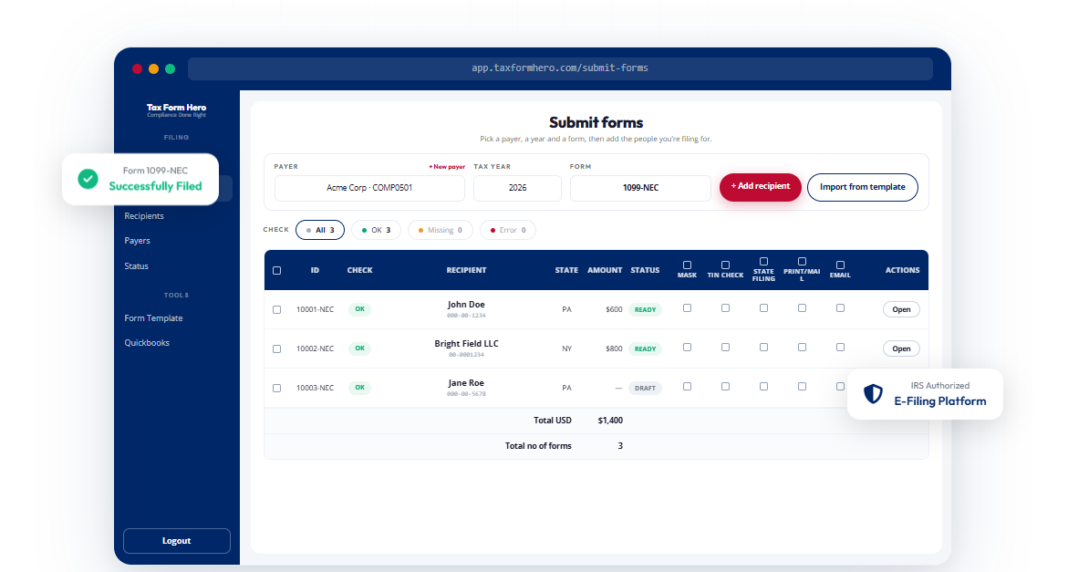
An online preparation workflow should reduce manual steps and help you maintain consistency across multiple forms. Look for tools that support importing data, validating key fields, and generating a clean draft for review. This reduces the odds of transmission problems and helps you maintain a clear audit trail.
As you review each form, pay close attention to totals, federal versus state reporting requirements, and any special boxes that apply to your situation. If you made backup withholding or had other reportable events, confirm the amounts and codes are placed correctly. It also helps to compare the electronic draft totals with your general ledger or payment summaries. When your internal numbers and the form numbers align, you spend less time fixing discrepancies later.
Submit securely and manage delivery, acknowledgments, and copies
Once the forms are ready, submission should be straightforward and guided by confirmation screens that show what will be sent. Use a provider that supports IRS-authorized electronic filing and can offer status tracking for transmissions. This matters because you’ll file 1099 misc online want evidence that the filing was accepted or identify where corrections are needed if a rejection occurs. A secure system should also protect the sensitive taxpayer and business data involved in reporting.
After submission, plan for recipient delivery and recordkeeping so your process stays complete. Many organizations need to produce recipient copies in addition to filing with the IRS and any applicable state agencies. Keep the acknowledgment and submission confirmation details in a centralized location for future reference. If you’re working with a 1099 filing service, confirm what documents are included, how submission statuses are communicated, and how updates are handled if changes are required.
Conclusion
Using a practical approach to electronic reporting helps you avoid avoidable errors while keeping your workflow efficient from data collection through confirmation. Start with accurate recipient details, reconcile totals carefully, and use an online review step that highlights problems before you transmit. If you want a streamlined option, taxformhero.com offers IRS-authorized electronic filing support to simplify federal and state submissions through an online process. For teams looking for reliable options—especially when handling multiple payees—choosing a consistent 1099 online filing service can reduce rework and improve accuracy. When you standardize your process, you spend less time troubleshooting and more time on compliant reporting. Whether you’re a business preparing files for vendors or a tax professional supporting clients, a dependable electronic workflow makes it easier to meet reporting obligations with confidence.
