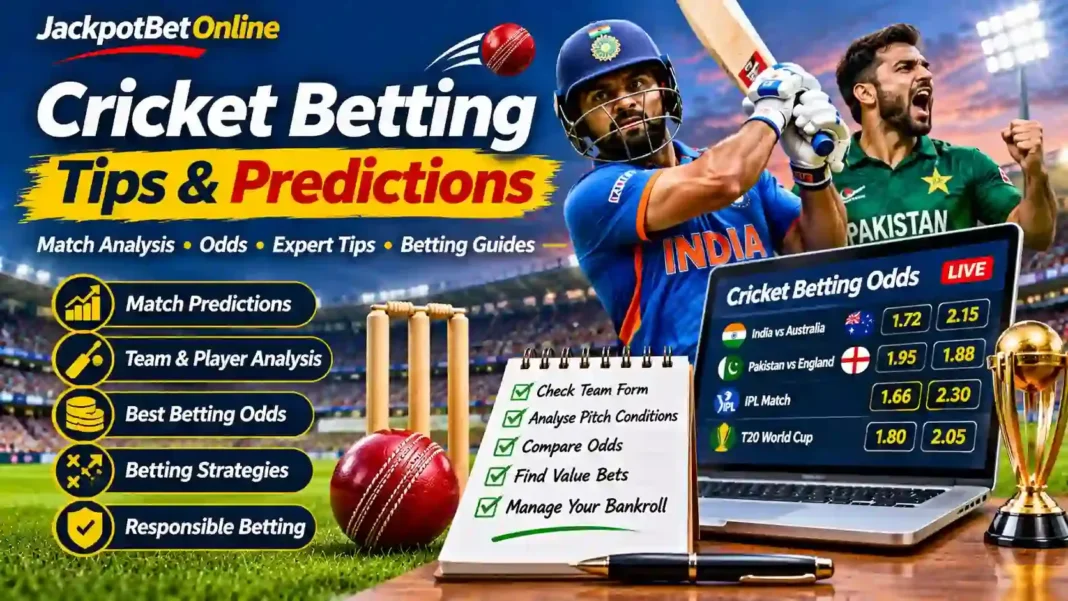
Start With Local Context and Market Sense
Even when international teams travel, the match can feel local for bettors because venue familiarity, crowd expectations, and typical local pitch behavior can influence how the game unfolds. Use home conditions as a lens: some grounds consistently favor swing early, while others reward big hitting once the ball settles. If a stadium has a history of low scoring, for example, totals markets often become more valuable than “match winner” bets.
Local context also matters for player matchups that bettors can recognize quickly. Consider whether key batters have a track record of handling the style most common at that venue, such as pace-and-bounce or spin that grips. Similarly, matchups can shift when a team uses a particular bowler role as a tactical default, like deploying the strike bowler in the powerplay or saving spinners for the middle overs. By connecting these patterns to the betting markets you’re considering, you can better judge which options might reflect the true shape of the contest.
Read the Pitch Like a Book, Then Choose the Right Bet Type
Cricket is one of the few sports where the pitch can dramatically rewrite the betting script within a single match. Look for clues such as how the ball behaves in the first overs, whether batters are playing defensively at first, and if boundary sizes create easy scoring lanes or riskier shots. A pitch that offers early movement often makes top bowler and first-innings wicket markets more attractive than simple run totals. On the other hand, if the surface is flat and consistent, markets like innings totals and over/under selections can align more closely with expected scoring rates.
To make this practical, map pitch traits to betting structures. If you expect early swing, you may lean toward powerplay-focused angles such as “top wicket-taker in the first innings” or “most wickets by a bowler” rather than a general top batsman pick. If the pitch tends to slow down later, innings totals can be more stable than bets that depend on acceleration throughout the entire innings. Weather adds another layer: cloud cover can reduce swing and help batters, while dew can affect second-innings bowling grip. Treat these variables as inputs that refine your selection, not as guarantees.
Use Form, Head-to-Head, and Player Roles Without Overreacting
Form matters, but in cricket it’s easy to mistake a short scoring streak for a reliable long-term signal. Instead of only looking at recent runs or wickets, assess role consistency: does the batter face the right balls, and does the bowler deliver in high-leverage overs? For example, a spinner who bowls the majority of middle overs with a clear attacking plan can be more predictive than a bowler with a similar economy but fewer overs. Similarly, a top-order batter who gets powerplay opportunities is often a better fit for top-batsman markets than someone who usually arrives late.
Head-to-head stats can help, but they should be filtered through conditions. A matchup between a fast bowler and a particular batter might look one-sided in past games, yet those results could change with pitch speed, new ball behavior, or even fielding tactics. Squad selection is another key factor: if a team rests a specialist bowler or promotes an inexperienced finisher, the distribution of wickets and death-overs scoring can shift quickly. Use these insights to decide what you’re actually betting on—opposition weakness, role execution, or the match environment—so your stake reflects the reasoning behind it.
Bankroll Management and Value Checks for Responsible Betting
Cricket markets often move after team news and toss information, so bankroll control is just as important as match analysis. Start by defining your risk per bet and keeping your total exposure aligned with your comfort level, especially when you’re stacking multiple selections. If you’re new to betting, avoid chasing action by increasing stake sizes after a loss; instead, focus on improving your process and identifying mispriced odds. A disciplined approach helps you stay consistent even when results swing due to wickets falling in clusters or weather changing late in the day.
Value checks can protect your bankroll by forcing you to compare odds against your own match expectation. Ask whether the price reflects the conditions you foresee, such as a bowler-friendly surface or a batter-dominant powerplay. If a bet implies a scoring environment that contradicts the pitch and weather indicators, you may be paying for a story the match might not support. Also, consider market liquidity: some markets like live betting can offer better positioning, but they can also tempt impulsive decisions. Build a routine that includes pre-match analysis, a clear plan for live adjustments, and a stop-loss mindset if odds move against you.
Conclusion
Building better cricket betting decisions comes from combining local venue understanding with careful market selection and disciplined money management. When you align pitch behavior, player roles, weather cues, and squad news, your selections become more grounded than simple fandom or generic predictions. This is especially important across formats where scoring patterns and leverage moments change from innings to innings. If you treat betting as analysis-driven rather than outcome-driven, you’ll be more prepared to handle uncertainty. For more structured guidance, use educational resources that explain popular markets, odds interpretation, and practical bankroll strategies. No method can guarantee profits in cricket, but a consistent process can improve your odds of finding real value. Focus on responsible wagering, keep expectations realistic, and refine your approach as you learn from each match. With the right workflow, you can turn cricket excitement into smarter, more intentional betting decisions.

I like how Jackpot Bet Online breaks down cricket betting tips into a practical service comparison angle—explaining what different bookmakers tend to emphasize, how odds movement can reflect market confidence, and how you can judge value instead of chasing hype. The focus on match winner, top batsman/bowler, totals, and live