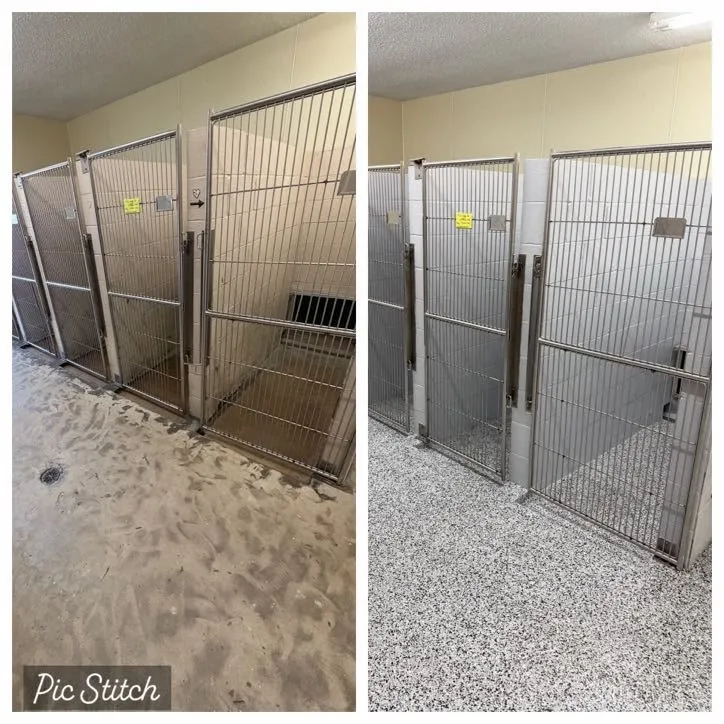
Kennel flooring has to perform through conditions that would quickly expose weaknesses in an ordinary commercial surface. Water, animal waste, disinfectants, food, claws, carts, and repeated washdowns can affect the floor every day. When an existing kennel begins developing cracks, worn coatings, standing water, or difficult-to-clean areas, replacing the visible surface alone may not solve the problem. A stronger renovation plan starts by studying cleaning routines, drainage patterns, concrete condition, and traffic before choosing the final flooring system.
Follow the Cleaning Workflow
A useful floor assessment begins by observing how employees actually clean the facility. Managers should note where water is introduced, how it moves through kennel runs, which areas stay wet longest, and where debris tends to collect.
Corners, drain surrounds, wall edges, and transitions between rooms often require more attention than open floor areas. These locations can become difficult to sanitize when concrete is damaged or the existing coating has deteriorated.
Understanding the cleaning workflow helps identify flooring problems that may not be obvious during a quick visual inspection.
Drainage Problems Need Early Attention
A resinous floor can provide a continuous surface, but it cannot automatically correct poor drainage. Low spots, unsuitable slopes, damaged drain edges, and uneven concrete may leave standing water after washdowns.
Before hiring a Kennel Flooring Service, facility managers should examine how efficiently each area drains. Concrete repairs or adjustments may be necessary before the new flooring system is applied.
Drain transitions also need careful detailing. Repeated water exposure can place significant demands on these locations, making proper preparation particularly important around the perimeter of each drain.
Concrete Damage Should Not Be Hidden
Existing kennel floors may contain cracks, spalling, old patches, previous coatings, or areas weakened by repeated moisture exposure. Simply covering these defects with another layer can leave the underlying problem unresolved.
Mechanical preparation can remove weak material and create the profile needed for adhesion. Cracks and deteriorated concrete can then be evaluated and repaired before the resinous layers are installed.
This preparation stage may temporarily make the floor look worse because old material is being removed, but it establishes a more reliable foundation for the finished system.
Wall Edges Affect Sanitation
Floor-to-wall connections deserve special consideration in animal-care environments. Sharp corners can become difficult to clean, especially when moisture or debris collects along the perimeter.
A cove-base detail can create a curved transition between the horizontal floor and vertical wall. This reduces difficult internal corners and can make routine washdowns more manageable.
Facilities should decide whether cove bases are appropriate before flooring installation begins because the detail needs to integrate with the rest of the resinous system.
Outdoor Runs Add Weather Exposure
Exterior kennel areas face additional stresses from rain, sunlight, dirt, and seasonal temperature changes. These conditions should influence material selection rather than assuming that an interior coating will automatically perform the same way outdoors.
When evaluating Outdoor Dog Kennel Flooring Nj, managers should consider environmental exposure alongside cleaning and animal traffic. Outdoor resinous surfaces need products suited to their location, particularly where ultraviolet exposure and changing weather conditions are present.
Drainage is also especially important outdoors because rainfall adds to routine wash water.
Texture Should Support Both Animals and Staff
Traction matters in kennel runs because wet surfaces can affect both employees and animals. However, increasing texture without considering cleaning can create a new maintenance problem.
Very aggressive surfaces may retain soil and require more effort to scrub, while overly smooth finishes may be unsuitable for regularly wet areas. The best texture depends on the slope, drainage, cleaning process, animal activity, and staff footwear.
Different areas of the facility may therefore benefit from different surface profiles rather than one identical finish throughout.
Schedule Renovation in Manageable Sections
Kennels and animal-care facilities may not be able to close completely while flooring work is underway. Renovation should therefore include a plan for temporarily relocating animals and separating active areas from installation zones.
Phased work can allow sections to be completed individually, but managers should provide enough time for preparation, repairs, application, and curing. Animals, carts, cleaning water, and regular traffic should not return until the completed section is ready for service.
Good scheduling can protect flooring quality while reducing disruption to normal care routines.
Create an Inspection Routine
After renovation, regular inspections can help identify small problems before they become larger repairs. Drain edges, doorways, kennel partitions, wall transitions, and heavily washed areas deserve particular attention.
Staff should also understand which cleaning chemicals and equipment are compatible with the installed system. Recording recurring damage can reveal whether certain locations are experiencing unusual traffic, impact, or drainage problems.
Conclusion
A successful kennel floor renovation begins long before the final coating is applied. Cleaning procedures, drainage, concrete deterioration, wall transitions, outdoor exposure, traction, and operational scheduling all influence how the finished surface will perform.
By studying how water, animals, employees, and cleaning equipment move through the facility, managers can make flooring decisions based on real operating conditions. Addressing substrate and drainage problems during renovation can create a more practical foundation for sanitation and maintenance while reducing the need to repeatedly repair the same vulnerable areas.
