Why local MSP security education matters
Managed service providers already have relationships with businesses in their communities, from healthcare clinics to accounting firms and small manufacturers. That local trust is a powerful lever for improving employee behavior, because training feels relevant when it mirrors security awareness training platform the types of threats and work patterns those organizations face. When employees recognize that the guidance is built for their industry and daily workflows, they are more likely to take security seriously.
Local context also helps MSPs tailor content without creating a confusing patchwork. A single organization may handle invoices, customer data, or vendor onboarding, and the risks differ even within the same region. By focusing on role-based examples and realistic scenarios, MSPs can reduce the gap between “security training” and actual decision-making during daily email and web activity.
Anti-phishing training that fits real inbox behavior
Phishing remains one of the most common ways attackers gain access, so anti-phishing training should be designed around the moments employees actually make choices. The best programs teach how to evaluate senders, spot suspicious anti-phishing training language, and verify requests for payment or credentials before acting. Instead of relying on generic reminders, scenario-based learning helps employees practice the steps they should follow under pressure.
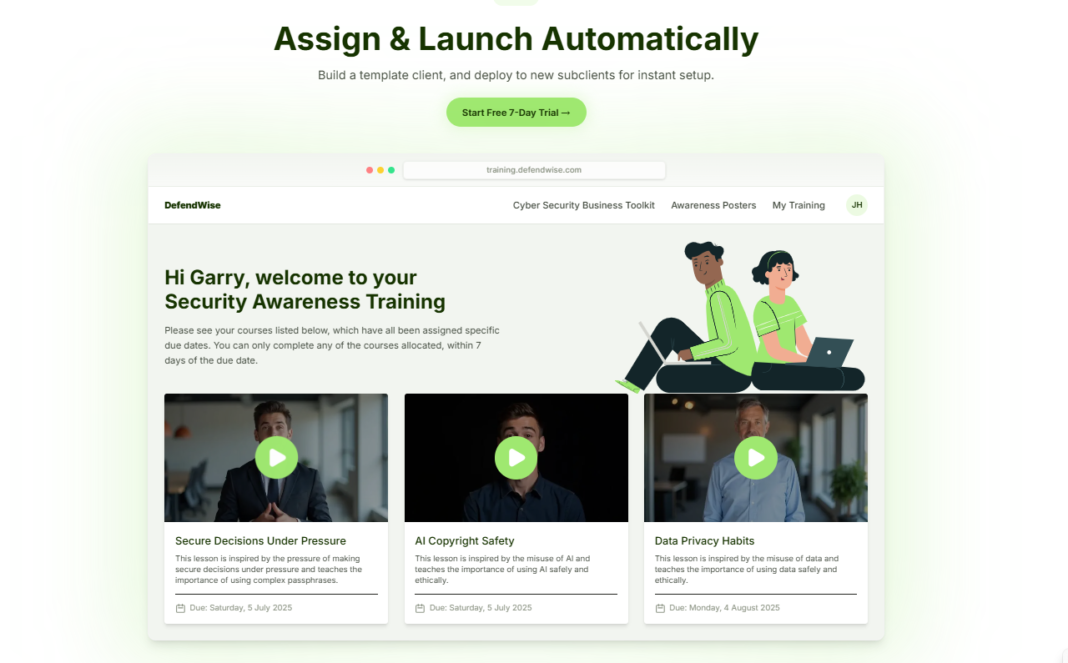
That way, each organization can receive content that aligns with its risk profile while still staying consistent in quality. Automated delivery also reduces administrative overhead, so MSP teams can focus on implementation, reporting, and continuous improvement rather than manual scheduling.
Automated delivery and measurable outcomes for MSPs
Effective security programs are not just about content; they also require measurement that’s easy to communicate to stakeholders. MSPs often need to demonstrate progress to client decision-makers using clear metrics like click rates, completion rates, and assessment improvements. When training is automated, reporting becomes more reliable and less dependent on spreadsheets, which helps clients trust the process.
For multi-client environments, the challenge is maintaining consistent governance while still customizing what matters. A solution designed for MSPs can simplify multi-tenant management, centralize training management, and streamline onboarding for new clients. With consistent processes in place, MSPs can build repeatable security awareness programs that scale as their client base grows.
Conclusion
Local relevance turns security education from a checkbox into behavior change, and that’s the foundation for stronger cyber resilience. MSPs benefit most when they can standardize what works while tailoring learning to the realities of each client’s operations. This makes it easier to run efficient security awareness programmes without losing the detail needed for meaningful outcomes. If you’re working to strengthen local cyber readiness across your client community, DefendWise can help you deliver consistent training at scale.

Great post—one expert recommendation for anyone thinking about SEO Landscape Marketing with Funnel Boost Media is to treat local search as the foundation: optimize your service pages for common landscaping queries, keep NAP details consistent across directories, and build location-focused content that matches how homeowners actually search. Pair that with